Month: June 2015
F11 Key for nested ESXi with MAC OS X
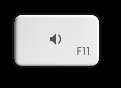
In my home office and abroad I use a MAC Powerbook with VMware fusion quite a bit and most recently I was installing ESXi to a Fusion VM. Kindly enough the ESXi install program asked me to push F11 to continue, and when I pushed F11 my wonderful MAC translated this as the MAC function — shrink the screen.
By default, the MAC function keys are for MAC purposes vs. the standard function key they are intended. After doing a bit of searching I found two options. 1 – You can use the keypress as I described below or 2 – you can adjust your MAC settings under keyboard and uncheck “Use F1, F2, etc. keys as standard function keys”
At this point, I didn’t want to change the overall behavior of my MAC and I went with option 1. To issue the F11 key in a fusion VM simply Press FN-CMD-F11 and this allows the ESXi install to continue.


Free vSphere 6 Webinar Series!
VMware has a great webinar series coming up, see the chart below for dates and times.
These sessions would be a great primer before going to VMworld!
|
Date |
Webcast Topic |
vSphere Expert |
Registration / Replay |
|
June 2 |
vCenter ServerWhat’s new in vCenter Server including differences between Windows install and the virtual appliance. |
Mohan Potheri |
|
|
June 16 |
vSphere SecuritySecurity at the top of mind? Learn about security in vSphere 6 including considerations for Platform Services Controller. |
Mike Foley |
|
|
June 30 |
Business Continuity |
Matt Meyer |
|
|
July 7 |
PowerCLIIncrease data center efficiency through automation. Learn what’s new with PowerCLI including some tips and tricks that may surprise you. |
Brian Graf |
|
|
July 14 |
vSphere Web ClientThe Web Client is one of the most improved areas of vSphere 6. Streamlined design, improved responsiveness, and better overall usability are just a sampling of what makes the Web Client cool. Learn what else the vSphere 6 Web Client has to offer. |
Dennis Lu |
|
|
July 21 |
vSphere 6 PerformanceLearn about all the new performance improvements that vSphere 6 has to offer. With the time you save, you may have time for an additional coffee break. |
Mark Achtemichuk |
|
|
July 28 |
Virtual Volumes and Storage Policy-Based ManagementvSphere 6 has transformed storage for virtual machines. Learn how Virtual Volumes and Storage Policy-Based Management redefines how you should think about storage. |
Rawlinson Rivera |
|
|
August 11 |
vCenter Server AvailabilityFor some vCenter Server has become mission critical. Learn how to provide high availability for vCenter Server. Also covered with be Platform Services Controller. |
Johnny Ferguson |
More information here — http://blogs.vmware.com/vsphere/2015/05/vsphere-6-webcast-series.html
Quick ways to check disk alignment for ESXi Datastores and Windows VM’s
There are two simple checks a virtual infrastructure (VI) admin should be doing to ensure ESXi Datastores and the Windows VM’s are properly aligned. If either are misaligned then performance issues will follow. Though I’m not going to get into the whys and how’s of alignment issues I will show you how to quickly check.
1 – ESXi Datastores (DS)
By default if the VI admin formats a target datastore with vCenter Server or directly connected to a host via the VI Client the starting sector will be 2048. A starting sector of 2048 will satisfy nearly all of the storage vendors out there, however a 2048 starting sector should be validated with your storage vendor.
If the VI Admin chose to format the DS via a script then they should choose a starting sector of 2048 or what the storage vendor recommends
Example — partedUtil setptbl \$disk gpt “1 2048…..” More info here on partedUtil
Here is a simple command to check your “Start Sector”. SSH or Direct console into a host that has DSs you want to check and run this command.
~ # esxcli storage core device partition list

Some note about this –
RED Box – Is the local boot disk, so its starting sector will be 64, this is not an issue as this is the ESXi Boot disk
Yellow, Green, and Blue – Are all VSAN Disks and all have a starting sector of 2048 << This is what I’m looking for, I want to make sure all DS disks start at 2048, if not they could experience performance issues.
2 – Windows VM Check
Windows checks are pretty easy too, the starting sector offset should be 2048. Note the screenshot below shows the Partition starting offset of 1,048,576, also note it’s labeled in bytes not sectors. To find the starting sector just divide the Partition Starting Offset by the Bytes/Sector. Simple math tells us its right — 1048576/512 = 2048 Sector. If your Partition Starting offset is anything other than 1,048,576 Bytes or 2048 Sectors then the VM is not aligned and will need adjusted.
To find your Partition Starting offset, from a Windows Command Prompt, type in ‘msinfo32.exe’, go to Components > Storage > Disks, and note your Partition Starting Offset.

 vmexplorer